for separation, divorce, and home transitions

for separation, divorce, and home transitions
Separation and divorce often force people to make major legal and financial decisions very quickly — sometimes before they fully understand what questions they should even be asking. One of the biggest problems people face early on is not knowing where to get accurate, Nova Scotia-specific information. Many individuals turn to Google during stressful moments and end up reading American legal advice, outdated forums, or information that simply does not apply to Nova Scotia family law or real estate practices.
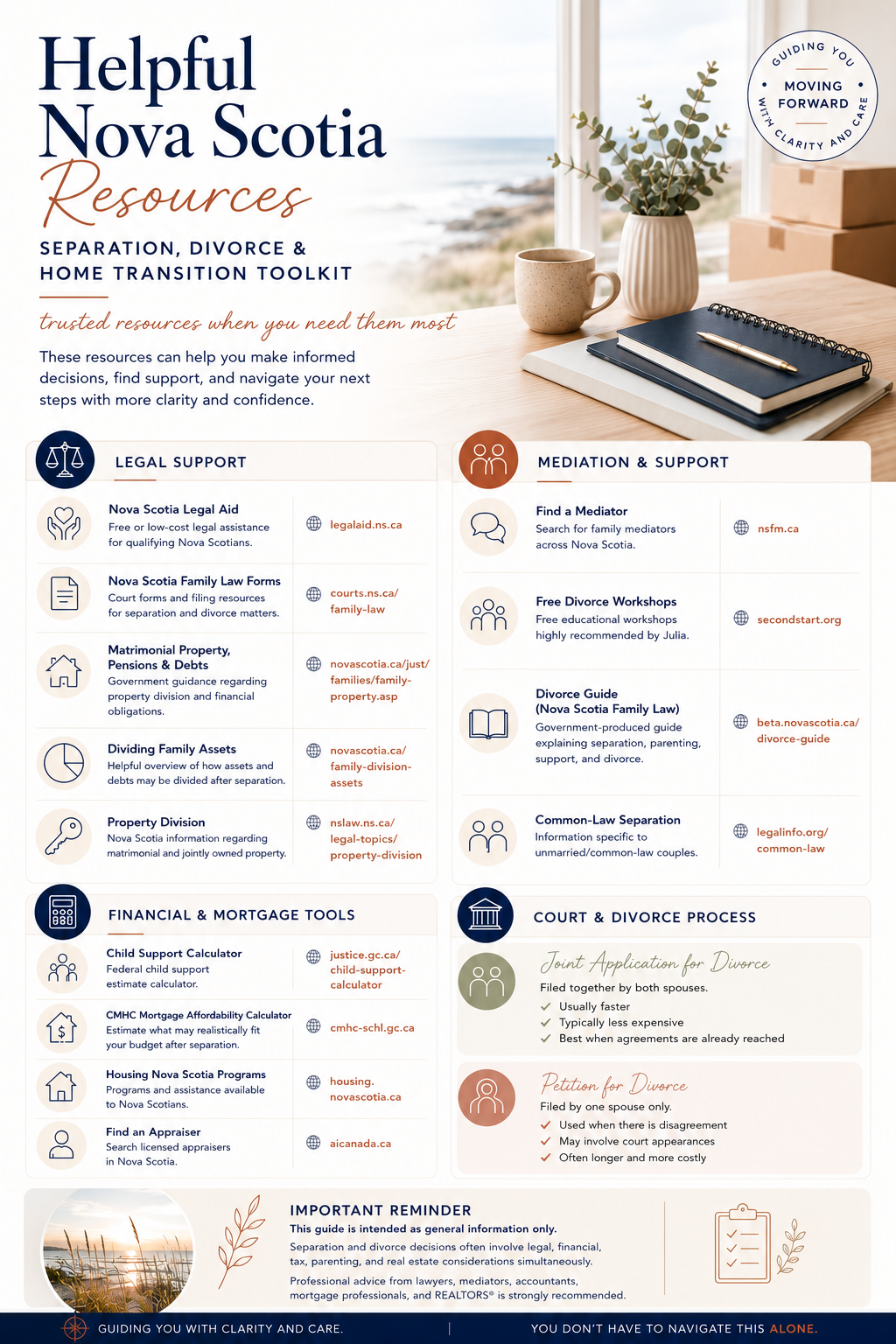
This resource page (and downloadable PDF) was created to help simplify that process by bringing together practical, locally relevant resources related to:
- separation and divorce
- common-law property rights
- mediation and conflict resolution
- legal aid and family law services
- parenting and support calculators
- mortgage and refinancing information
- housing assistance and affordability tools
- court forms and legal process information
- real estate planning during separation
One of the most important things people can do early in a separation is become financially organized.
That often means gathering:
- mortgage statements
- property tax information
- insurance policies
- pension and RRSP information
- bank statements
- lines of credit and debt balances
- proof of contributions toward the home
- legal ownership documents
Having this information available early can significantly reduce delays, confusion, and legal costs later — especially if a home sale, refinance, or buyout may become part of the process.
Mediation resources are also included because many couples underestimate how expensive and time-consuming court disputes involving real estate can become. In the right situations, mediation can help create structured conversations around parenting schedules, sale timelines, occupancy, household expenses, repairs, and division of proceeds before positions become more adversarial.
This PDF also includes resources related to affordability and future housing planning, because one of the biggest fears during separation is uncertainty around where someone will live next — and what they can realistically afford on one income. Understanding mortgage qualification, support calculations, rental costs, refinancing requirements, and credit considerations early often helps people make stronger long-term decisions.
As a REALTOR® who regularly works with separating homeowners, one of the biggest things I have learned is that people do not just need a real estate plan — they need a roadmap. Sometimes the most valuable thing someone can provide during separation is simply direction, organization, and access to the right professionals before costly mistakes are made.
This resource is intended for informational purposes only and should not replace legal, financial, tax, mortgage, or mental health advice specific to your situation.
Julia Fauteux is a Nova Scotia REALTOR® specializing in separation, divorce, relocation, and major life transitions involving real estate. These resources are for general informational purposes only and should not replace legal, financial, or professional advice specific to your situation.


 Information should be deemed reliable but not guaranteed, all representations are approximate, and individual verification is recommended. Copyright ©2017 All rights reserved.
The trademarks REALTOR®, REALTORS® and the REALTOR® logo are controlled by The Canadian Real Estate Association (CREA) and identify real estate professionals who are members of CREA. The trademarks MLS®, Multiple Listing Service® and the associated logos are owned by CREA and identify the quality of services
provided by real estate professionals who are members of CREA. Used under license.
Show More...
Information should be deemed reliable but not guaranteed, all representations are approximate, and individual verification is recommended. Copyright ©2017 All rights reserved.
The trademarks REALTOR®, REALTORS® and the REALTOR® logo are controlled by The Canadian Real Estate Association (CREA) and identify real estate professionals who are members of CREA. The trademarks MLS®, Multiple Listing Service® and the associated logos are owned by CREA and identify the quality of services
provided by real estate professionals who are members of CREA. Used under license.
Show More...
 All information deemed reliable but not guaranteed. All properties are subject to prior sale, change or withdrawal. Neither listing broker(s) or information provider(s) shall be responsible for any typographical errors, misinformation, misprints and shall be held totally harmless. Listing(s) information is provided for consumer's personal, non-commercial use and may not be used for any purpose other than to identify prospective properties consumers may be interested in purchasing. The data relating
to real estate for sale on this website comes in part from the Internet Data Exchange program of the Multiple Listing Service. Real estate listings held by brokerage firms other than REMAX Nova may be marked with the Internet Data Exchange logo and detailed information about those properties will include the name of the listing broker(s) when required by the MLS. Copyright ©2026 All rights reserved.
Last Updated: September 22, 2026 2:22 PM UTC
Show More...
All information deemed reliable but not guaranteed. All properties are subject to prior sale, change or withdrawal. Neither listing broker(s) or information provider(s) shall be responsible for any typographical errors, misinformation, misprints and shall be held totally harmless. Listing(s) information is provided for consumer's personal, non-commercial use and may not be used for any purpose other than to identify prospective properties consumers may be interested in purchasing. The data relating
to real estate for sale on this website comes in part from the Internet Data Exchange program of the Multiple Listing Service. Real estate listings held by brokerage firms other than REMAX Nova may be marked with the Internet Data Exchange logo and detailed information about those properties will include the name of the listing broker(s) when required by the MLS. Copyright ©2026 All rights reserved.
Last Updated: September 22, 2026 2:22 PM UTC
Show More...